


Women have a 7–10 times greater risk of having thyroid disorders compared to men. What’s more, the risk of thyroid problems increases with age. It’s not surprising then that some menopausal women will have thyroid problems at this time. In fact, it’s now clear that oestrogen and progesterone have both direct and indirect effects on the thyroid; meanwhile thyroid dysfunction can also impact reproductive health, potentially aggravating flooding and menstrual irregularity at the perimenopause.
Hypothyroidism
An underactive thyroid (hyperthyroidism) is the most common problem and is frequently diagnosed around middle age in women. This is where the gland produces too little of the thyroid hormones T3 and T4 for optimal health. The symptoms and signs of low thyroid function are similar to some of the symptoms of the menopause, and can worsen matters at this time of life.
Symptoms of underactive thyroid
- tiredness
- weight gain
- chilliness and sensitivity to cold
- depression or fuzzy thinking
- constipation
- dry skin or dry, thinning hair
- joint and muscle pain
- heavy or irregular periods
- slowed heart rate
If you’re in perimenopause and can relate to these symptoms, it’s worth checking whether a thyroid problem is contributing to your symptoms, and if so, taking steps to support it. In fact, it’s helpful for ALL middle-aged women to learn about nutritional and lifestyle measures to ensure continued thyroid health. For more information check out my article Caring for your thyroid.
The thyroid and the sex hormones
- The effects of oestrogen and progesterone on the thyroid are complex, but it is the erratic hormone levels in perimenopause and especially oestrogen dominance that impact thyroid health at this time, usually lowering thyroid function
- Hypothyroid can depress liver function, further exacerbating oestrogen dominance
- Low thyroid function can result on heavy or irregular periods – causing further suffering during the menopausal transition
Why does the hypothyroidism occur?
Most cases of hypothyroidism are caused by an autoimmune mechanism (termed Hashimoto’s thyroiditis). Low thyroid function can also be the result of insufficient iodine, the result of treatment for an overactive thyroid (including surgery or irradiation), or problems with the pituitary or hypothalamus (structures in the brain that regulate the thyroid). It’s also worth noting that thyroid function reduces naturally as we age.
The thyroid and stress
Stress causes us to release more of the stress hormone cortisol from the adrenals and cortisol can inhibit secretion of TSH (thyroid stimulating hormone) from the pituitary gland, leading to reduced thyroid hormone release. Chronic stress can ultimately lead to a flattening out of the normal early morning cortisol spike that helps us get ‘up-and-doing’ in the mornings, further impacting tiredness and increasing the risk of chronic illness.
Serious consequences of poor thyroid function
It’s miserable to feel tired and miserable. But, in addition to the symptoms listed there are some more serious and long-term risks of untreated low thyroid function.
The big one is the heart. When thyroid function is low, the heart is slower and contracts more weakly; this puts the heart at risk for heart failure, high blood pressure and cardiovascular disease. Hypothyroidism can also reduce kidney function and can cause problems with the nervous system. Finally, at it’s most extreme, longstanding hypothyroid can result in a rare life-threatening complication myxoedema coma.
Hypothyroid: What is the body saying?
The body sometimes provides a metaphor for what’s going on at an emotional level. It’s not uncommon for a woman to reach her middle years feeling burnt out, exhausted, stuck, uninspired, and pulled in all directions from the demands of work, family, or community commitments (often in combination!). She’s spent the previous 20+ years giving to everyone but herself. After all, the message that we are given from society is that this is what it means to be a ‘good’ and ‘successful’ woman.
Burnout
When we look at the common symptoms of hypothyroidism it’s not surprising that it appears at this time in a woman’s life. It’s all about depletion, a feeling of zero energy in body and mind – cold, tired, sleepy, sluggish, gaining weight, constipation, hair loss, poor memory. The run up to this burnt-out state is often chronic stress. A typical patient has been ‘running on empty’ for quite some years before symptoms start to appear.
Disconnection
The thyroid sits at the base of the neck. Some mind–body practitioners point out the role of the neck area as the link between head and body, or more specifically the head and the heart. The modern world encourages us to live in our heads and identify with our logical mind; this tends to predominate over our intuitive sense, which is often felt in the body and provides us with a more creative and heart-centred approach to life. When there’s an energetic blockage in the neck area we might ask ourselves, Am I forgetting to listen to the deepest, most intuitive part of myself? Dropping our awareness down into our body and our heart can help get us in touch this part of ourselves.
Energetically the thyroid is associated with the throat chakra (Vishuddha), which is all about communication and self-expression. When we don’t speak our truth – by expressing what we truly need and want – but rather allow our own unique values, passions and expression to be sidelined in favour of societally more accepted or expected ways of being, we can find that our body has something to say about it. See this article for more on the mind–body and the throat area.

A holistic approach to treatment
There can be no real long-term solution that doesn’t address the underlying factors: stress and emotional aspects, nutrition, metabolic and hormonal health.
Managing stress, making lifestyle changes, take time out, and doing more of what you love are essential. Also check out my info about thyroid nutrition and avoiding environmental thyroid toxins here.
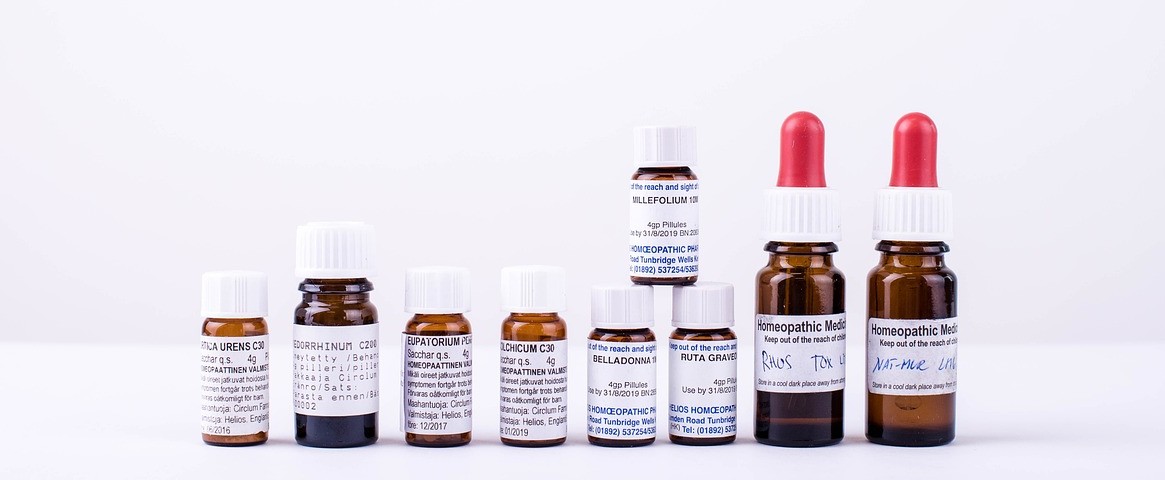
Homeopathy has much to offer in terms of thyroid health at menopause, especially when the problem is at an early stage, at a low level (i. e. subclinical) and/or supplemental thyroxine has not yet been started. Homeopathy stimulates the body to heal itself. What’s more, it treats the whole person – so remedies are chosen not only to address the thyroid but also the menopausal symptoms and a woman’s wider health and stress issues.
Once someone is taking thyroxine, it can be difficult to reverse the need for it. However, homeopathy is still very beneficial to address the broader symptoms and does not interact with supplemented thyroxine or any other medications.
Some homeopathic remedies
There are many other remedies that may be indicated, and these are just a few of the remedies homeopaths use to support women with reduced thyroid function.
Fucus vesiculosus: Made of the seaweed bladderwrack, which is rich in iodine, this remedy is often used in low potencies to help with thyroid issues, especially goitre where accompanied by obesity and constipation. It is considered especially indicated for non-toxic goitre (thyroid enlargement without overproduction or underproduction of thyroid hormones).
Thyroidinum: A homeopathic remedy that is similar to glandular extracts used in functional medicine. Homeopaths use this remedy, made from healthy thyroid gland, to support thyroid health, both in hypo- and hyperthyroid, to help stabilise function.
Calc carb: This constitutional remedy is frequently indicated in hypothyroid where the patient is overweight, has a sluggish metabolism, cold and clammy skin, becomes easily breathless, sweats easily around the head, and is tired and jaded through overwork or worry.
Sepia: Frequently indicated for women at menopause with low thyroid function. The woman needing this remedy will feel apathetic and tired – especially about her domestic life, where family demands may drain her. She may have a heavy feeling in her pelvic area and a sense of stagnation. She generally feels better for vigorous exercise.
Kali iodum: This remedy is indicated in women who have enlarged glands, including the thyroid (i.e. goitre). People needing this remedy tend to be tired and prone to water retention, are puffy around the eyes with a tendency to sinus congestion. They are apt to rheumatic or musculoskeletal problems. They can feel quite anxious, which is often helped by walking in the open air.
Graphites: This remedy is considered for overweight patients who are sensitive to the cold. People needing this remedy typically have flatulent digestive problems and skin that is dry, cracked or thickened. They tend to feel mentally sluggish and moody. They may have hoarseness and a sense of constriction in the throat due to a goitre.
Lycopodium: This remedy is indicated for women who are prone to digestive issues with sluggishness and flatulence. They tend to have a sweet tooth and at the same time are aggravated by starchy foods. They tend to generally feel worse in the late afternoon/evening. They can be low in confidence, anxious and irritable.
Herbal supplements
The leading plant supplement as traditionally been the seaweed bladderwrack because of its high iodine content. However, I would not recommend people self-prescribe this supplement as it is easy to have too much iodine, which can aggravate autoimmune thyroid disorders. The following are a few herbs that can be helpful taken individually and intermittently in low doses as needed:
Nettle: Stinging nettle is rich in nutrients, containing minerals such as iron, magnesium, selenium and zinc, crucial for thyroid hormone production. It generally provides nourishment and support to the endocrine glands.
Milk thistle: A wonderful support for the liver, which can help clear toxins, support the liver’s work activating and deactivating the thyroid hormones and boosts liver function – which is useful in hypothyroid.
Ashwagandha: A well-known Ayurvedic and herb considered an adaptogen, meaning that it supports the body in coping with stress. It’s considered beneficial for adrenal stress, fatigue, depression and anxiety and appears to support thyroid hormone production.
Wild oat: This herb is a gentle nervous system and adrenal support that can help with exhaustion, sleep and brain fog.
Remember ‘natural’ does not necessarily mean safe. Many herbs can have side effects, adverse reactions, or interactions with other medications/supplements – please check with your doctor if you are self-prescribing.

Related Posts







-
 Loss of smell and taste18 September 2021
-
 Minor skin infections: pustules, abscesses and wounds17 December 2023
-
 It’s very much about the terrain …28 August 2021
- No comments have been published yet.